

See the alternative working — clone in 60 seconds
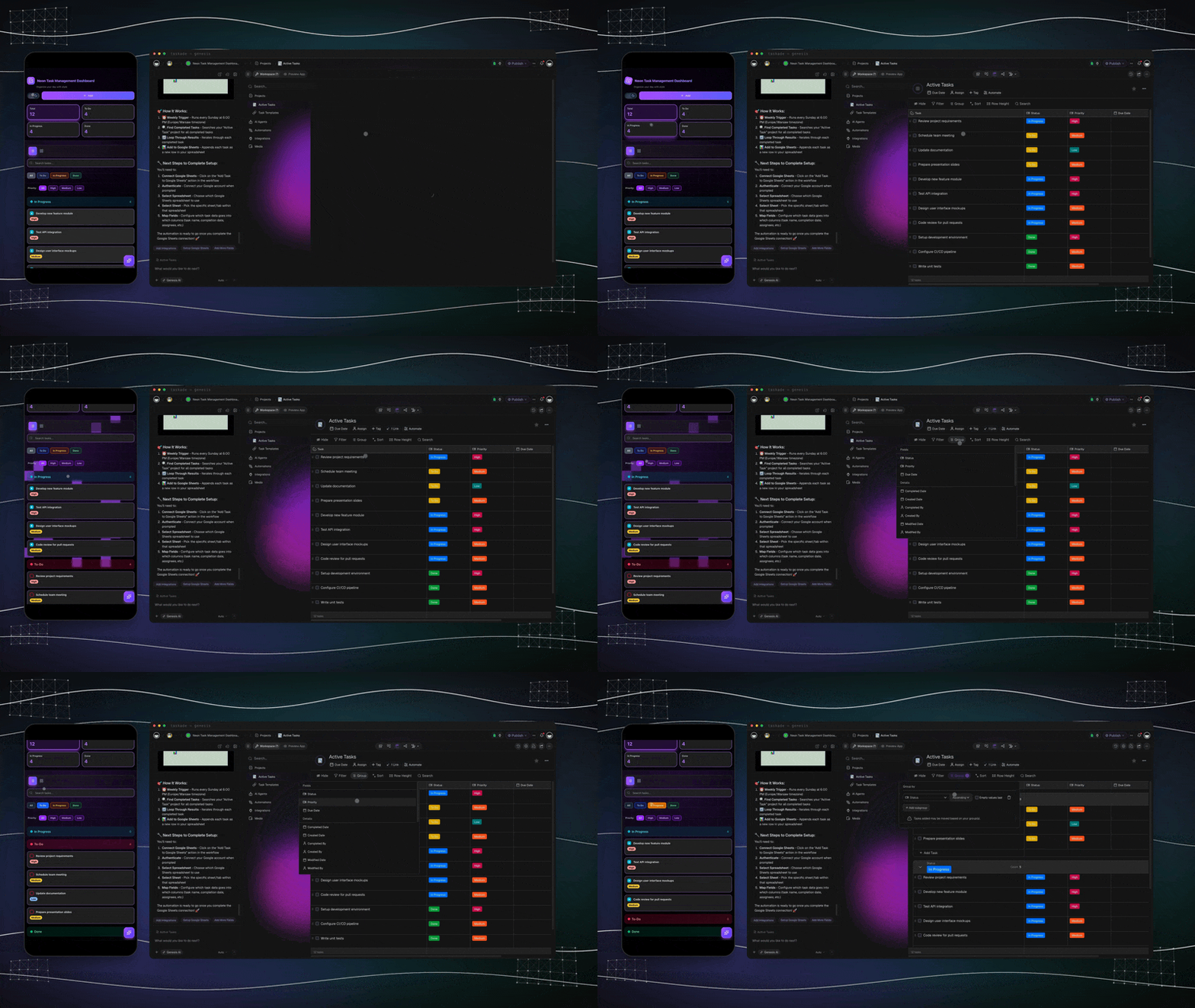
No signup, no credit card. Open the live neon task manager → (opens in new tab)
| Capability | Wunderlist | Taskade Genesis |
|---|---|---|
| Pricing (starting) | Discontinued (sunset by Microsoft in 2020) | $0 Free · $16/mo Pro (10 seats) |
| Cloneable live demo | ❌ | ✅ |
| Built-in AI agents | None | ✅ 33 built-in tools |
| Automation engine | Reminder rules only | ✅ Temporal-backed, 100+ integrations |
| Workspace DNA loop | ❌ | ✅ ▲ Memory · ■ Intelligence · ● Execution |
What is Taskade?
Taskade is an AI-native workspace founded by John Xie, Dionis Loire, and Stan Chang in 2017 (Y Combinator-backed). It pairs structured projects across seven views with AI Agents v2, durable workflow automations, and the Genesis app builder — one prompt, one deployed application.
What was Wunderlist?
Wunderlist was a beloved cross-platform to-do list app created by Christian Reber and the 6Wunderkinder team in Berlin, launched in 2011. It won App of the Year for Mac in 2013 and a Google Play Editor's Choice award in 2014.
Wunderlist at a glance: Created by Christian Reber in Berlin, 2011. Acquired by Microsoft in 2015 for ~$150M. Sunset on May 6, 2020 in favor of Microsoft To Do. Read the complete history of Wunderlist →
Wunderlist was loved for its simplicity, beautiful design, and free cross-platform reach. When Microsoft shut it down in May 2020, the official replacement (Microsoft To Do) preserved the core to-do experience but never recaptured the original community's enthusiasm — and it never gained AI agents, multiplayer apps, or the workflow surface modern teams expect.
Why Wunderlist refugees pick Taskade
A modern AI-native workspace, not a frozen 2011 to-do list
Taskade keeps everything you loved about Wunderlist — fast capture, cross-platform sync, gorgeous UX — and adds AI Agents v2, Genesis apps, and 100+ integrations on top.
Real collaboration, not just shared lists
Multiplayer editing with real-time cursors, in-app chat, video calls, and screen share. The same workspace your personal lists live in scales to team apps.
Seven project views, not one
Lists, Boards, Calendars, Tables, Mind Maps, Gantt, and Org Charts. Pick the view that matches the work.
AI Agents and Genesis built in
AI Agents v2 include persistent memory, 33 built-in tools, and custom tools. Genesis ships entire applications from a prompt — no DevOps, no code.
100+ bidirectional integrations
Durable Automations across 100+ integrations — triggers pull events in (Slack, Gmail, Sheets, Calendly, webhooks), actions push data out (Stripe, Shopify, Notion, Salesforce, GitHub).
The Workspace DNA advantage
Taskade is built on Workspace DNA — a self-reinforcing loop between three pillars.
- Memory (Projects) — Every project doubles as the structured data layer for tasks, files, and structured fields.
- Intelligence (Agents) — Custom AI Agents with persistent memory and 33 built-in tools, embeddable inside Genesis Apps.
- Execution (Automations) — Durable workflows triggered by external events that read from Memory, act through Intelligence, and write the results back into Memory.
Wunderlist remembered your tasks. Taskade remembers everything you and your team have ever worked on — and then acts on it. Read the Workspace DNA explainer →
Choose Taskade if
- You want a modern AI-native home for everything you used Wunderlist for
- You want AI agents that act, not just lists that sit there
- You collaborate with anyone (or want the option to)
- You want seven views instead of one
- You need durable automation workflows across 100+ integrations
Choose Microsoft To Do if
- You want a Microsoft-native, lightweight replacement that mirrors the original Wunderlist experience
- You do not need AI agents, app generation, or multiplayer editing
Frequently asked questions
Can I migrate from Wunderlist (or Microsoft To Do) into Taskade?
Yes. Both exports translate cleanly into Taskade list-view projects via CSV, Markdown, or plain text.
Is Taskade really free?
Yes — Free Forever covers unlimited projects, unlimited members, all seven views, AI Chat, and Genesis with metered credits. Pro is $16/month annual for unlimited apps and 10 seats.
Which AI models does Taskade use?
15+ frontier models from OpenAI, Anthropic, and Google, routed automatically by plan tier.
Does Taskade work cross-platform like Wunderlist did?
Yes — native iOS, Android, Mac, Windows, Linux, and web with real-time sync across all surfaces.
Build without permission
- Build with Genesis → — One prompt, one deployed app
- AI App Builder — Full apps from prompts
- AI Agent Platform — Digital teammates with persistent memory
- Workflow Automation — 100+ bidirectional integrations
- Browse the Community Gallery — Clone real Genesis apps
Related reading
- Build Without Permission — Our manifesto
- How Workspace DNA Works — The architecture
- Origin of Living Software — Why apps should be alive
- Vibe Coding for Non-Developers — Build apps without code
- Agentic Workflows That Replace Busywork — Real automation patterns